
Removing tooth decay goes hand in hand with another common dental procedure – filling the tooth. Fillings stay in your mouth for many years, so it is worth knowing what your options are and what the most important differences between white and amalgam fillings are.
What a filling does
During tooth decay treatment, the infected part of the tooth is removed, which leaves a cavity in the tooth. This cavity becomes a critical area for the tooth. The solution is a filling.
What a filling does:
- Stops decay from spreading – the filling prevents bacteria and food debris from getting into the new cavity, so the decay does not spread further.
- Replaces the missing part of the tooth – with a filling, the tooth regains its original shape.
- Restores chewing – a tooth with a filling is strong enough to chew food properly again.
- Protects the sensitive parts of the tooth – the filling protects the dentin and the sensitive dental pulp from temperature changes (hot/cold) and from pressure when chewing.
- Better appearance of the tooth and smile – modern white fillings are designed to look as natural as possible. Your tooth can look the way it did when it was completely healthy.
Tooth decay treatment belongs to so-called conservative dentistry. If you are planning this procedure and want the treated tooth to last as long as possible, it is worth knowing which material will stay in your mouth for years and what to expect from it.

What is an amalgam filling?
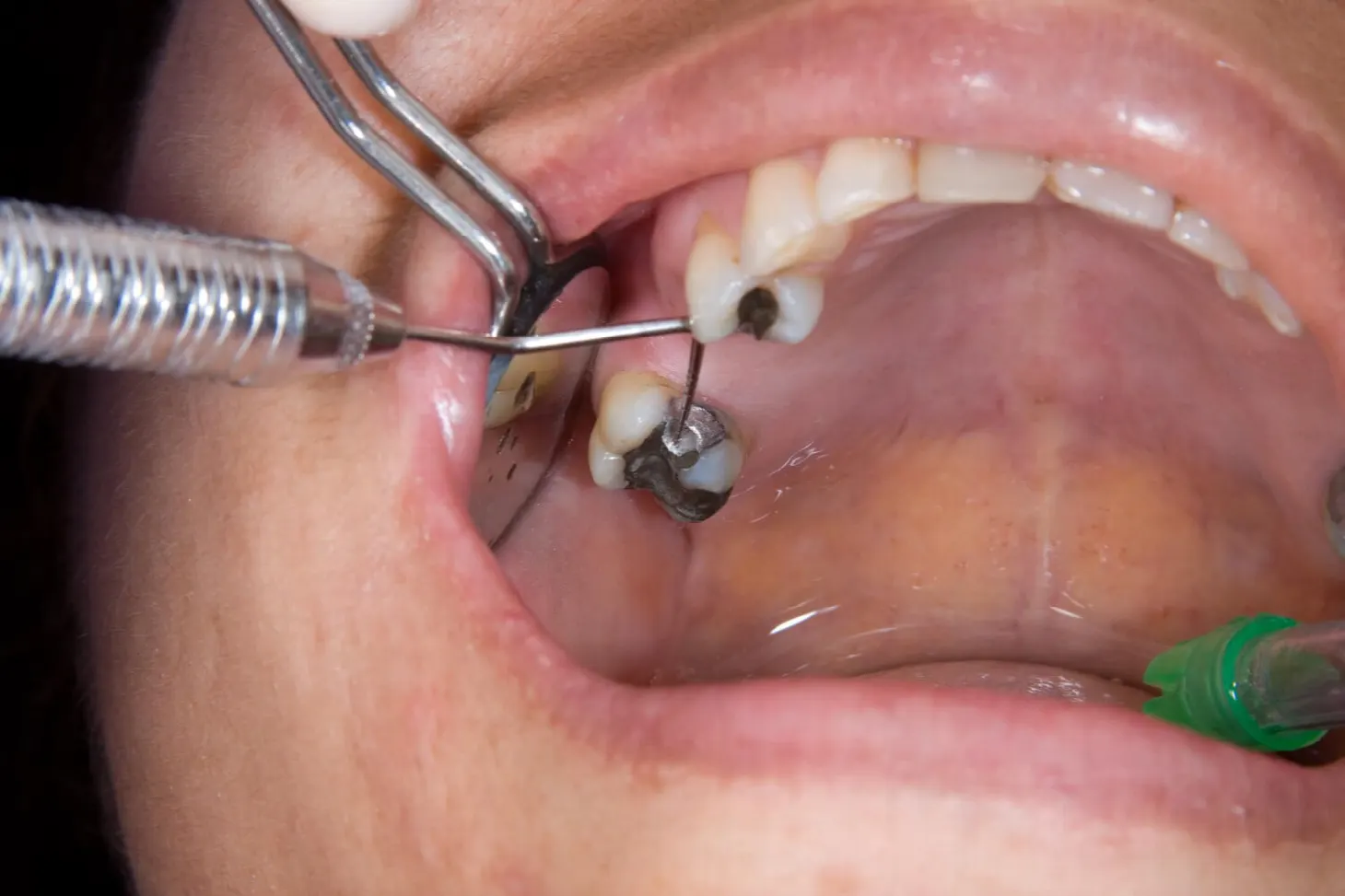
An amalgam filling used to be one of the most common fillings for treating tooth decay. It is an alloy of mercury and a metal powder made of silver, tin and copper. The result is a silvery to dark grey material (the typical visible “dark filling”). The advantages of amalgam were its low price, long lifespan and quick work.
What was talked about less is that with amalgam, the cavity in the tooth has to be shaped so that its walls widen towards the inside of the tooth and the opening on the surface is smaller. This means that healthy tooth tissue is also removed and the filling has to be pressed into the tooth more.
Modern dentistry is moving away from amalgam. Since 2018, amalgam fillings have been banned for children under 15 and for pregnant or breastfeeding women. A complete ban on amalgam fillings in Slovakia and across the EU is approaching. The main reason is the mercury content, which is a risk for the environment and, with long-term exposure, may also be a risk for human health.
What is a so-called white filling?
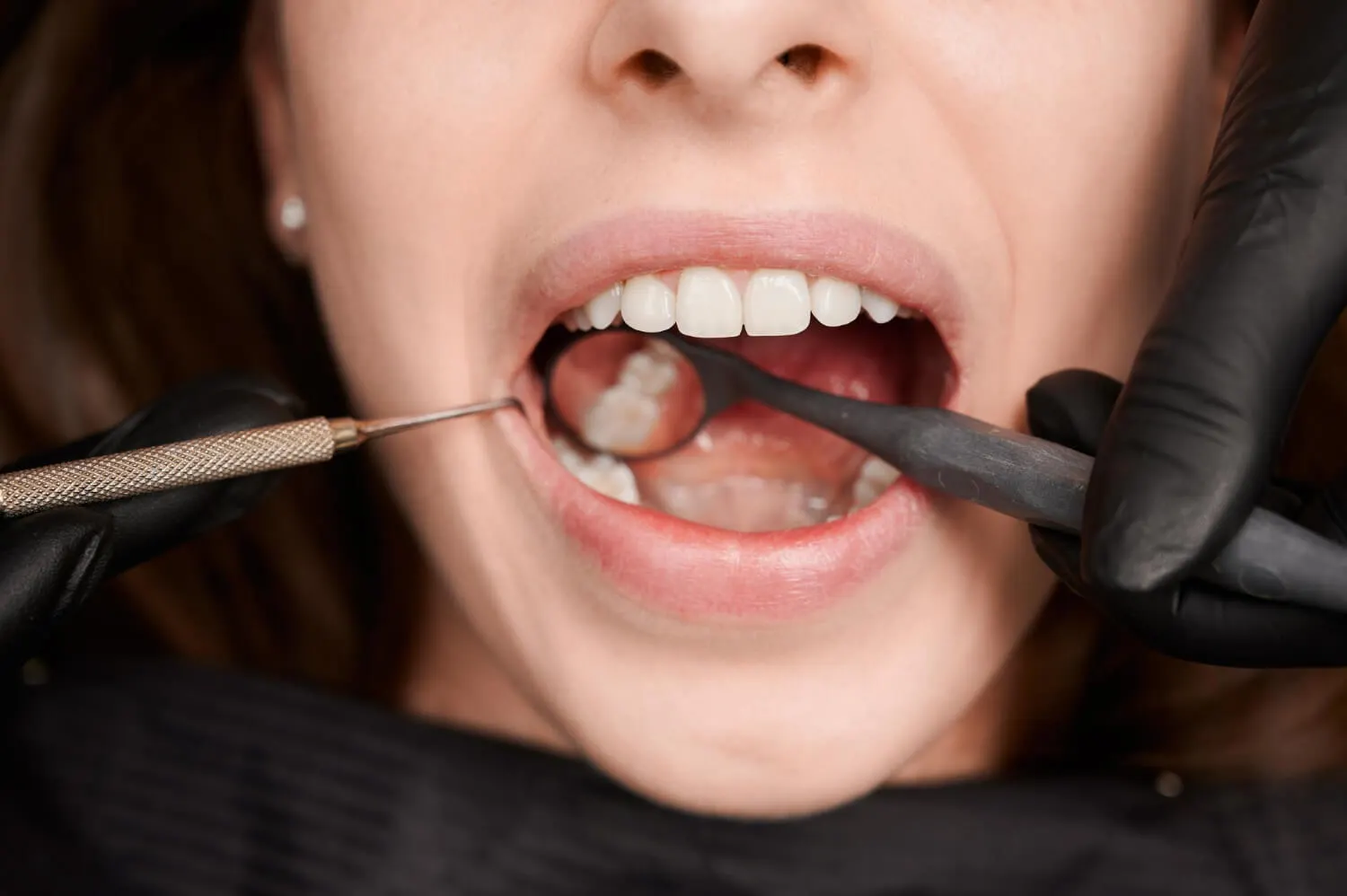
“White fillings” is the simple name for light-cured composite fillings, which have become popular for their natural look and discreet appearance. The composite material is based on resin with added fillers (glass or ceramic particles). The fillers give the filling the necessary wear resistance and strength.
When a white filling is made, the composite material is applied to the cavity in layers and each layer is hardened with a curing lamp. The advantage is that this material bonds very well to the tooth tissue, so the drilled cavity does not need to be widened as it does with amalgam.
Modern white fillings show good durability and colour stability. They can be made in a shade that blends in with the colour of your natural teeth, so they are also a great choice for repairing decay and injuries on front teeth.
Differences between amalgam and white fillings
| Property | Amalgam filling (dark) | Composite filling (white) |
|---|---|---|
| Colour | Visible, much darker than the tooth | Discreet, white or in the natural shade of the tooth |
| Application | Quick | Layering the material takes more time |
| Durability | High resistance to chewing pressure | Very good resistance – depending on the location |
| Lifespan | Very long | Long to very long – depending on the material and procedure |
| Current use | Being phased out, a complete ban is expected | Currently the material of first choice in modern dentistry |
| Price | Low | Higher |
How much does a white filling cost?
In Košice, a white composite filling costs from €52 for one tooth surface to €139 for three surfaces. In Chorvátsky Grob, a composite restoration of a tooth costs €150–200. Replacing an old amalgam filling: removing the old filling costs €15 in Chorvátsky Grob. You can find all prices on the tooth decay treatment page.
Do you need tooth decay treatment? Are you thinking about replacing old amalgam fillings with modern white fillings? Contact us, book a consultation and at Happydent we will provide modern conservative dentistry with full expertise.
 Facebook