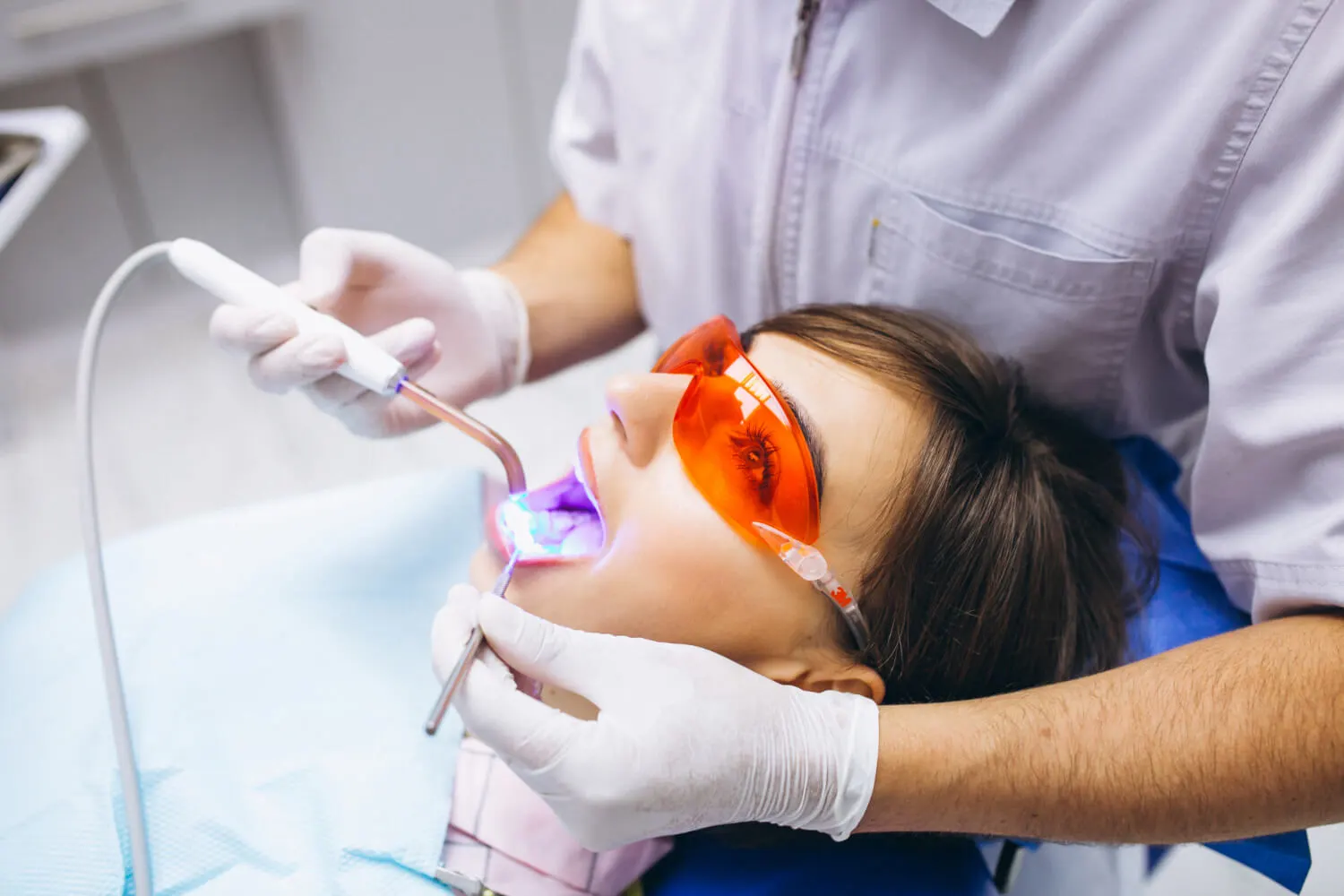
Beautiful white teeth are no longer just for celebrities. If you also want a bright smile, you have several options. Home whitening has become a trend in recent years, but as many people have found, it does not always bring a satisfying result. How does teeth whitening work and what really works? Here is a comparison of the effectiveness and safety of professional in-office whitening and the risks and limits of over-the-counter products.
What determines the colour of teeth?
The natural colour of teeth is not just one single shade. It is influenced by several factors that are individual for each person. First of all, it depends on the colour of the dentin, which is naturally yellowish to greyish. The dentin is covered by tooth enamel. Enamel is “milky translucent”, and its thickness determines how much the dentin shows through. The thicker the enamel, the better it masks the colour of the dentin and the whiter the teeth look.
What causes tooth discolouration?
People usually cannot keep the colour of their teeth the same for life. If you look in the mirror and feel that your teeth have lost their whiteness and look yellowish or greyish, there can be several reasons. The main ones are:
- food and drinks that contain colour pigments – coffee, tea, fruit juices, cola, red wine, dark berries, curry (the pigments settle on the surface of the enamel);
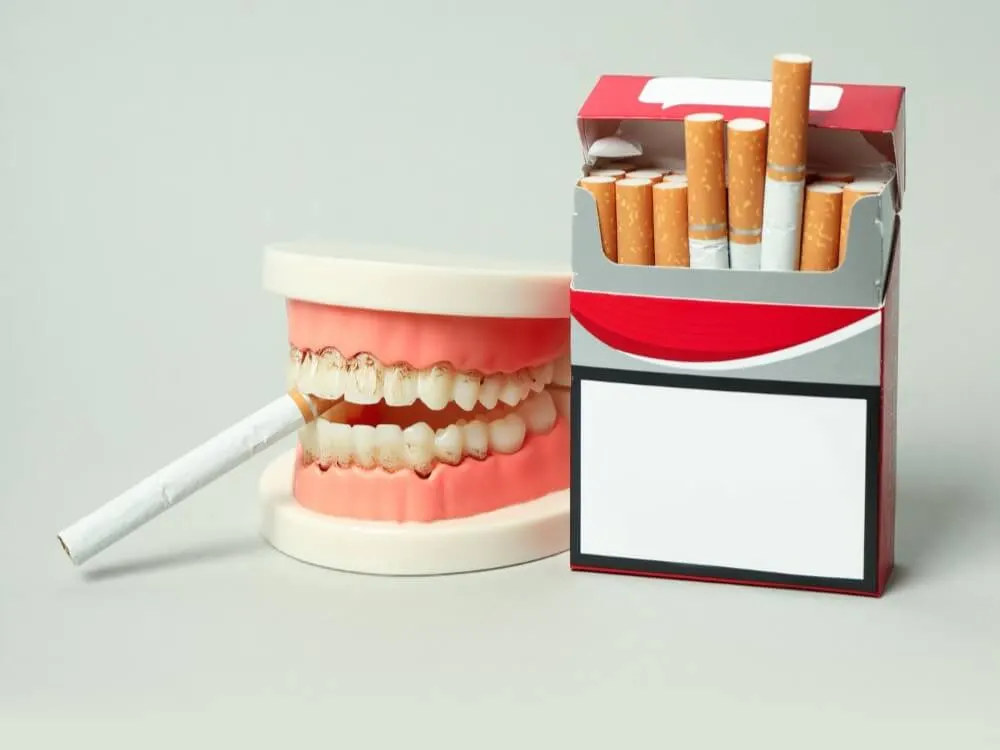
- smoking and tobacco;
- poor oral hygiene (build-up of plaque and tartar, which trap pigments from food).
Besides these external factors, there is one factor you cannot fight – age. As we get older, the enamel naturally wears down and gets thinner, so the colour of the dentin becomes more visible and the teeth lose their whiteness. Some medications can also discolour teeth (for example, medication for high blood pressure, antihistamines or antibiotics). Teeth after root canal treatment change colour over time.
How does teeth whitening work?
The enamel surface has microscopic pores through which colour pigments penetrate deeper into its structure. Surface staining, which can still be removed quite easily with regular dental hygiene, can turn into long-term, unsightly discolouration if oral hygiene is neglected.
The aim of teeth whitening is to remove discolouration and stains. This is done mainly with hydrogen peroxide and carbamide peroxide. These are oxidising agents that break down colour pigments in the enamel and dentin in a chemical process. The pigment molecules break down into smaller, colourless molecules, so the teeth look whiter and brighter.
Professional vs. home teeth whitening – comparison
If you are considering teeth whitening, it is important to know the differences between professional and home whitening. Although both are called teeth whitening, they do not work the same way or give the same result.
Professional teeth whitening
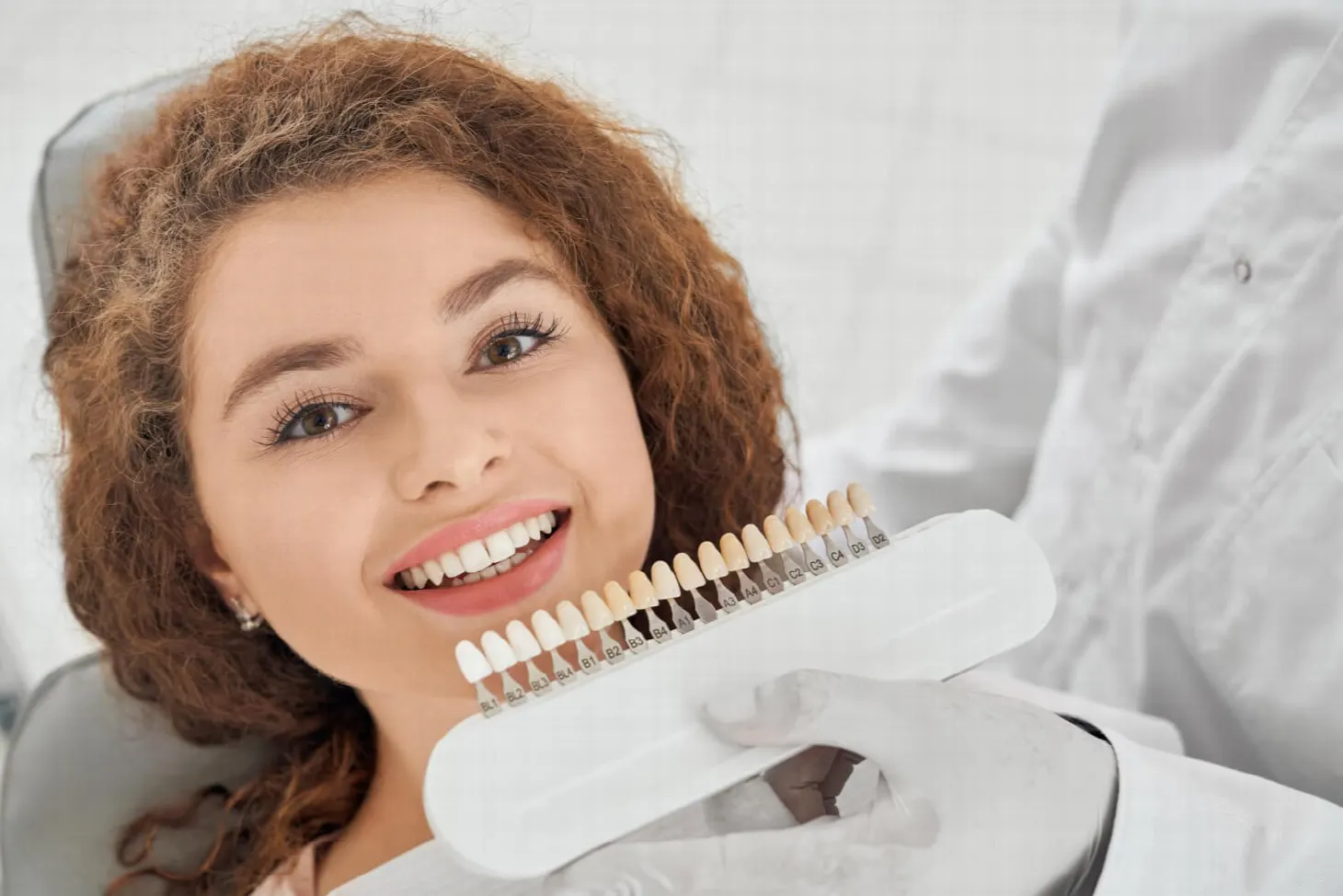
Professional teeth whitening is carried out under the supervision of a dentist and a dental hygienist at the clinic, with a safe result as the priority.
Before any whitening, you should have a dental check-up and dental hygiene, which removes plaque and tartar. Only a perfectly clean tooth surface is ready for whitening. The dentist and the dental hygienist will also recommend the most suitable and gentle method for the current condition of your teeth. Crowns, veneers and fillings cannot be whitened, so in some cases they need to be replaced.
The main advantage of whitening under professional supervision is a fairly noticeable result. The dentist or dental hygienist uses more concentrated whitening products and has a wide range of dental equipment, instruments and aids for safe but very effective whitening.
At Happydent, we use the modern and very gentle PURE Whitening method, which gives excellent results. Do not miss our online guide “Your path to a radiant smile“, which explains clearly how whitening works at our clinic.
Home teeth whitening
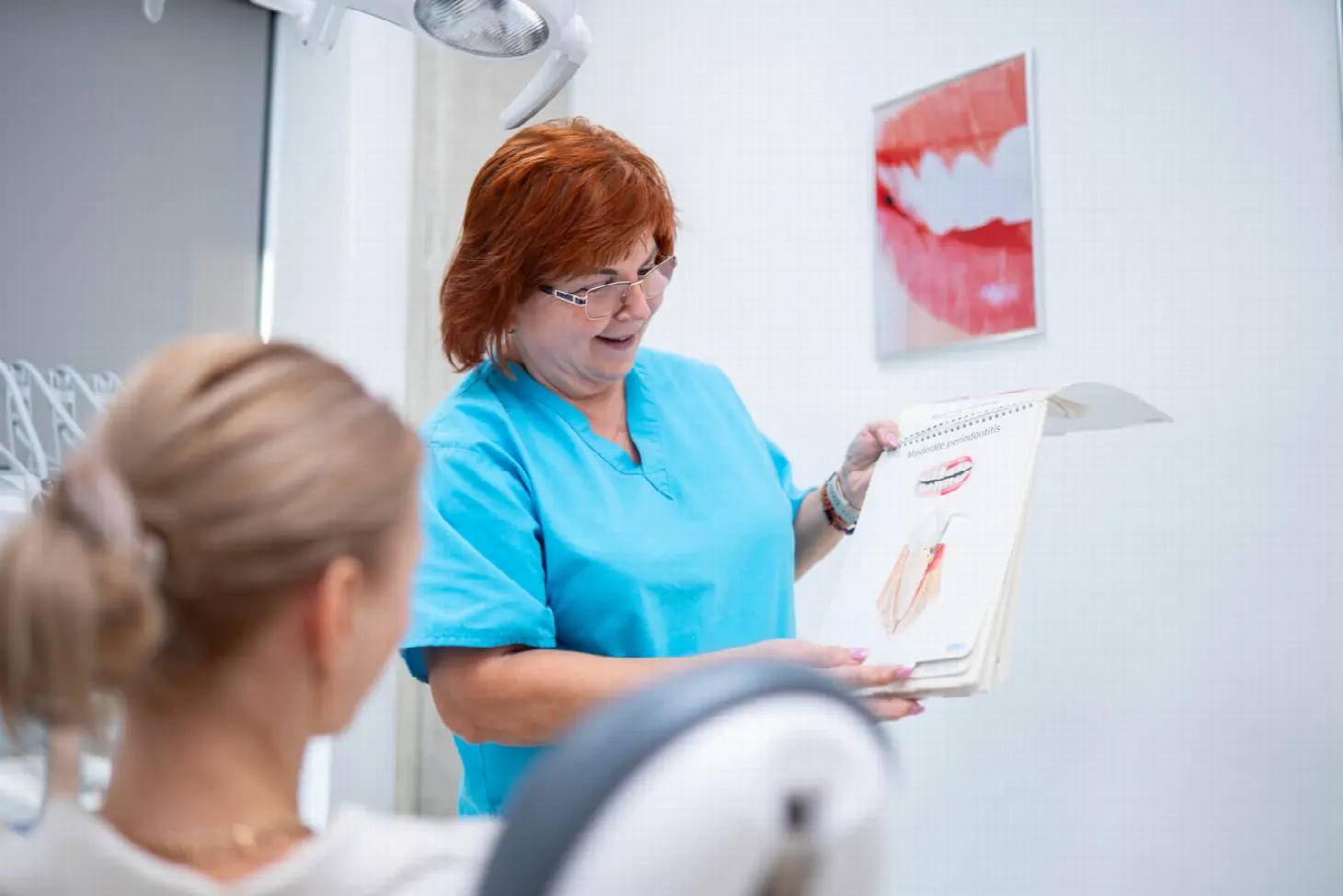
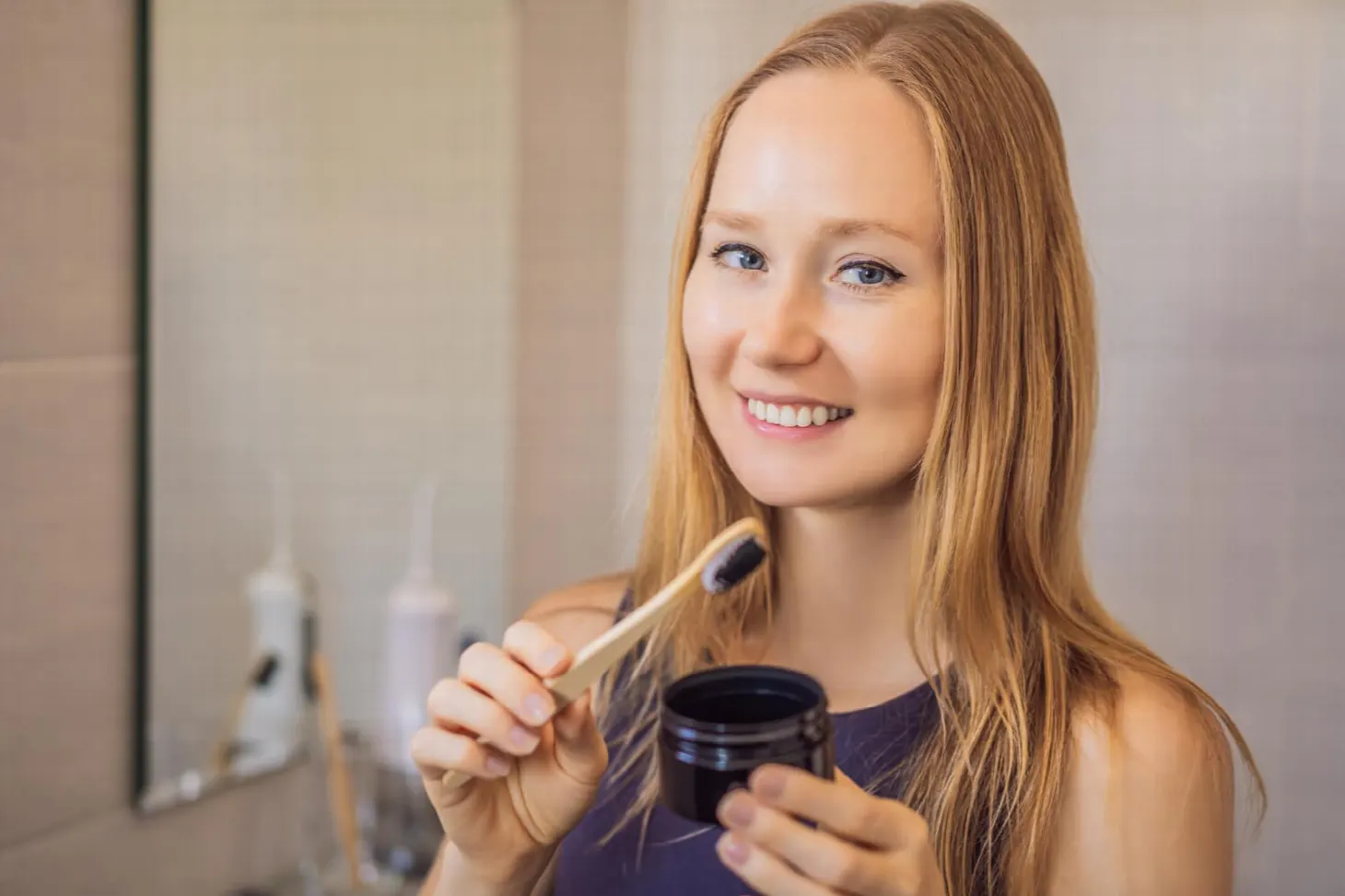
Home whitening uses over-the-counter whitening products. These are mainly whitening strips, toothpastes, powders and whitening pens available in drugstores and pharmacies. Because anyone can buy them, their concentration of whitening agents is very low, which means they can remove only surface stains and rarely give deeper, long-lasting whitening.
Thanks to their affordable price, home whitening quickly became a trend. However, if it is done without consulting a dentist and a dental hygienist, it has certain drawbacks and risks. Even before home whitening, you should know the condition of your teeth and not expose damaged teeth or inflamed gums to chemical procedures.
The most common drawbacks are a weak effect, uneven whitening, gum irritation and damage, and increased tooth sensitivity. The expected “miracle” often does not happen.
How much does professional teeth whitening cost?
In Košice, professional teeth whitening costs from €250 (Opalescence 40 %); combined PURE Whitening and Philips ZOOM! whitening cost €350. In Chorvátsky Grob, BEYOND in-office whitening costs €450. Before whitening, we check your teeth and gums. You can find an overview of methods and prices on the teeth whitening page.
How to decide?
Will you try an uncertain trend or choose a responsible approach? Only a dentist and a dental hygienist can properly assess the condition of your teeth and gums so that whitening is done safely and without damage. If you want to invest in the health and beauty of your teeth, contact us and we will guide you through teeth whitening with full expertise.
 Facebook