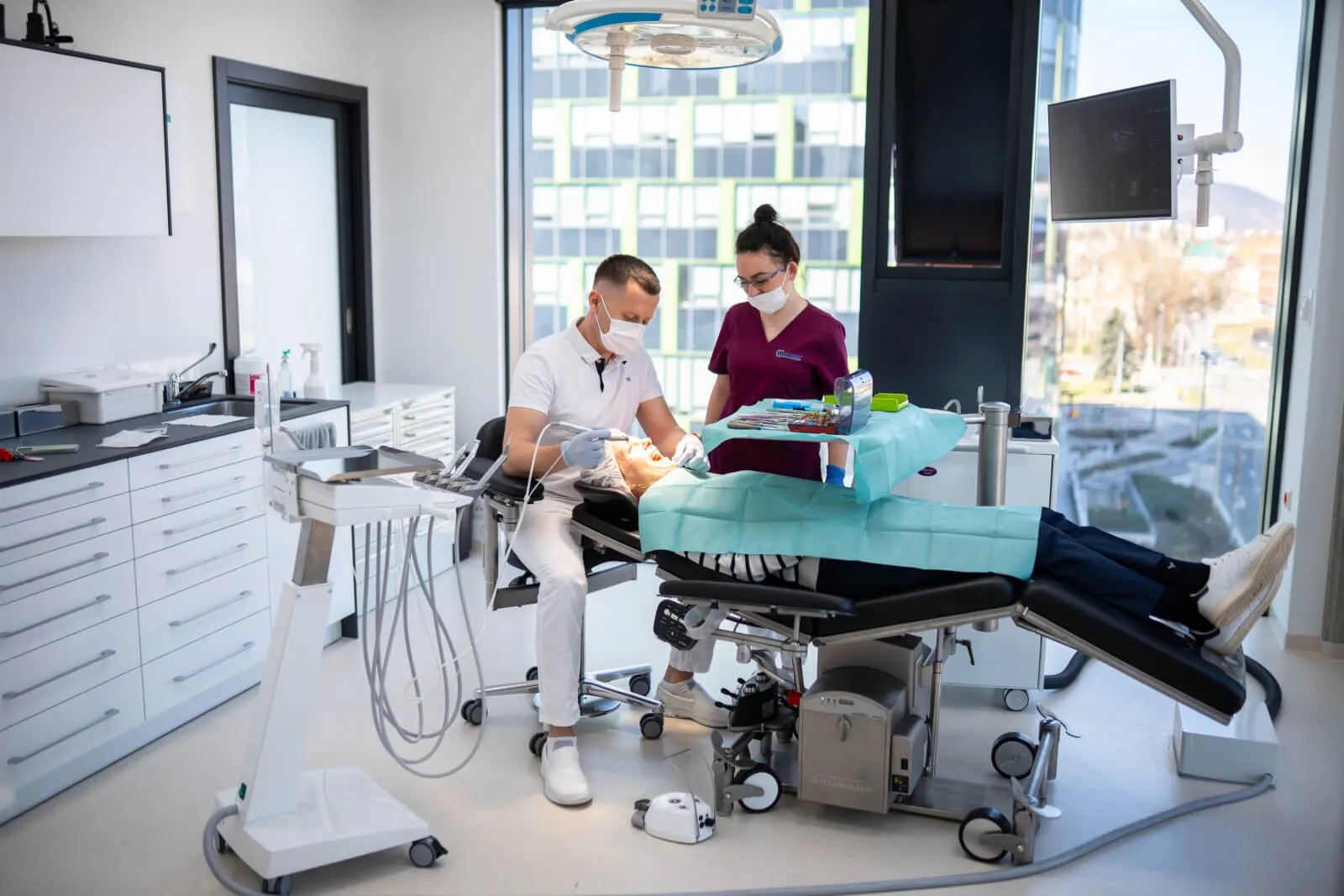
Dental implants have been used in Slovakia for decades, yet many people still feel some respect for the procedure itself. So let us go through the most important things about how the treatment works.
Placing a dental implant is one of the most advanced ways to replace a missing tooth. It is not only about appearance and a confident smile. A dental implant is a stable replacement that is firmly integrated with the bone, lasts a long time and lets you chew normally. But how does the treatment work and how long does healing take? At the Happydent dental clinic we proceed as follows.
Looking for prices, implant types or a consultation date? You will find everything about the treatment on the page dental implants in Košice and Chorvátsky Grob.
Initial consultation and diagnostics
Before the procedure you have an initial consultation and diagnostics, during which we take X-rays and a 3D model of your teeth. We assess the current condition of your teeth and gums. If necessary, we treat any problems before implantation (for example, decay or gum inflammation).
It is also important to assess the quality and amount of bone where the implant is to be placed. If you lost the tooth a long time ago and the bone has shrunk at the site of the future implant, it may first be necessary to perform augmentation – bone grafting, which extends healing by several more months.
Using the 3shape TRIOS system we make a scan of your mouth. The data is used to design a surgical guide on the computer. Temporary crowns are printed on a 3D printer.

Preparing for the implant procedure
We are happy to answer all your questions. Our aim is for you to be fully informed before one or more implants are placed. We recommend taking the day of the procedure off. Although the procedure takes 15–60 minutes on average, it is surgery in the mouth that involves the gums and bone, and once the anaesthesia wears off you will feel some discomfort and soreness. Remember to eat beforehand, because you will not be able to eat for several hours after the procedure.
Placing the dental implant
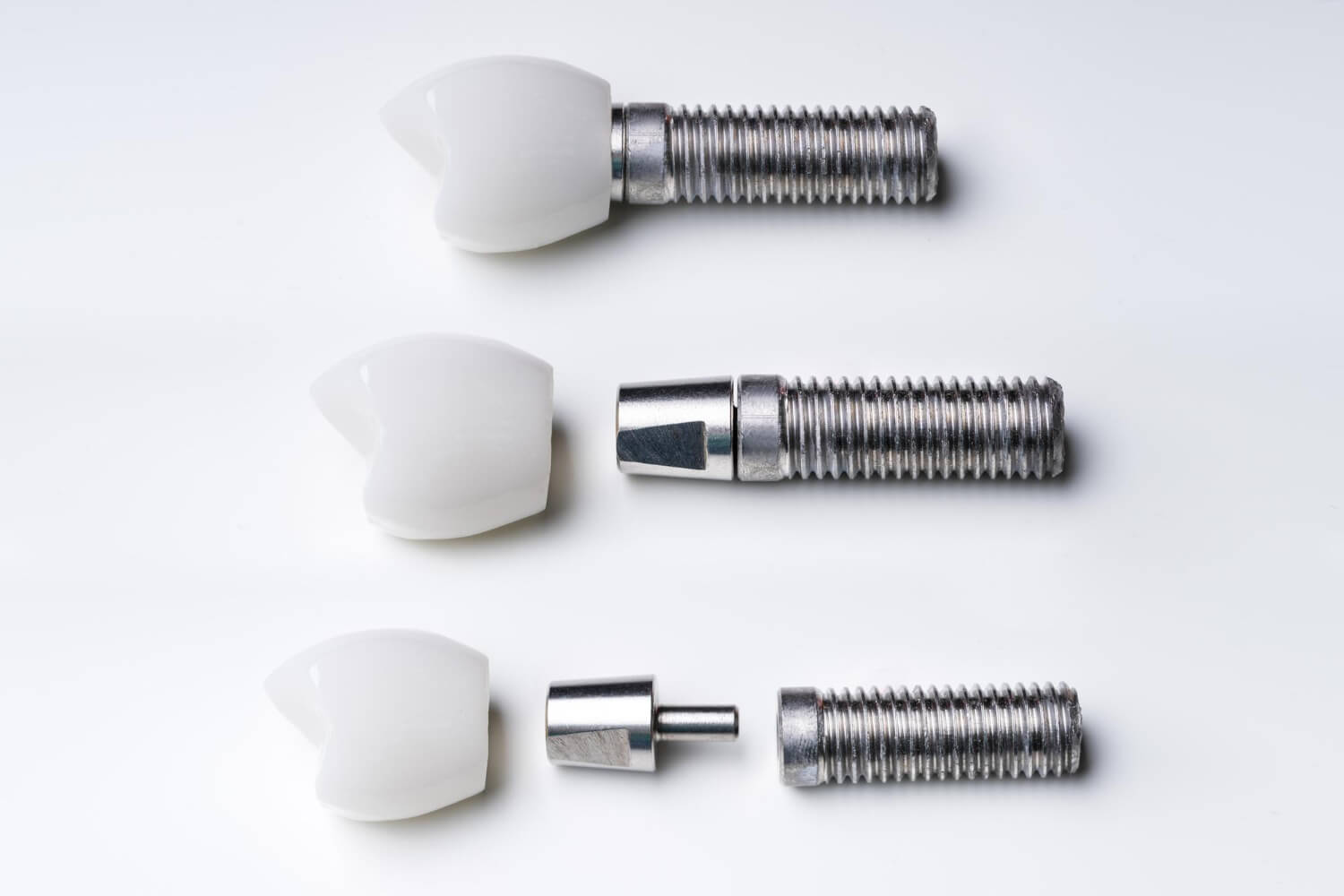
Before we describe the surgery, let us look at how a dental implant is built. A dental implant consists of 3 basic parts:
- a titanium screw (the “artificial root”), placed surgically into the upper or lower jaw bone;
- an abutment (prosthetic connector), the key part linking the screw and the visible tooth;
- a crown (the prosthetic tooth), which sits above the gum, replaces the visible part of the tooth and is used for chewing and appearance.
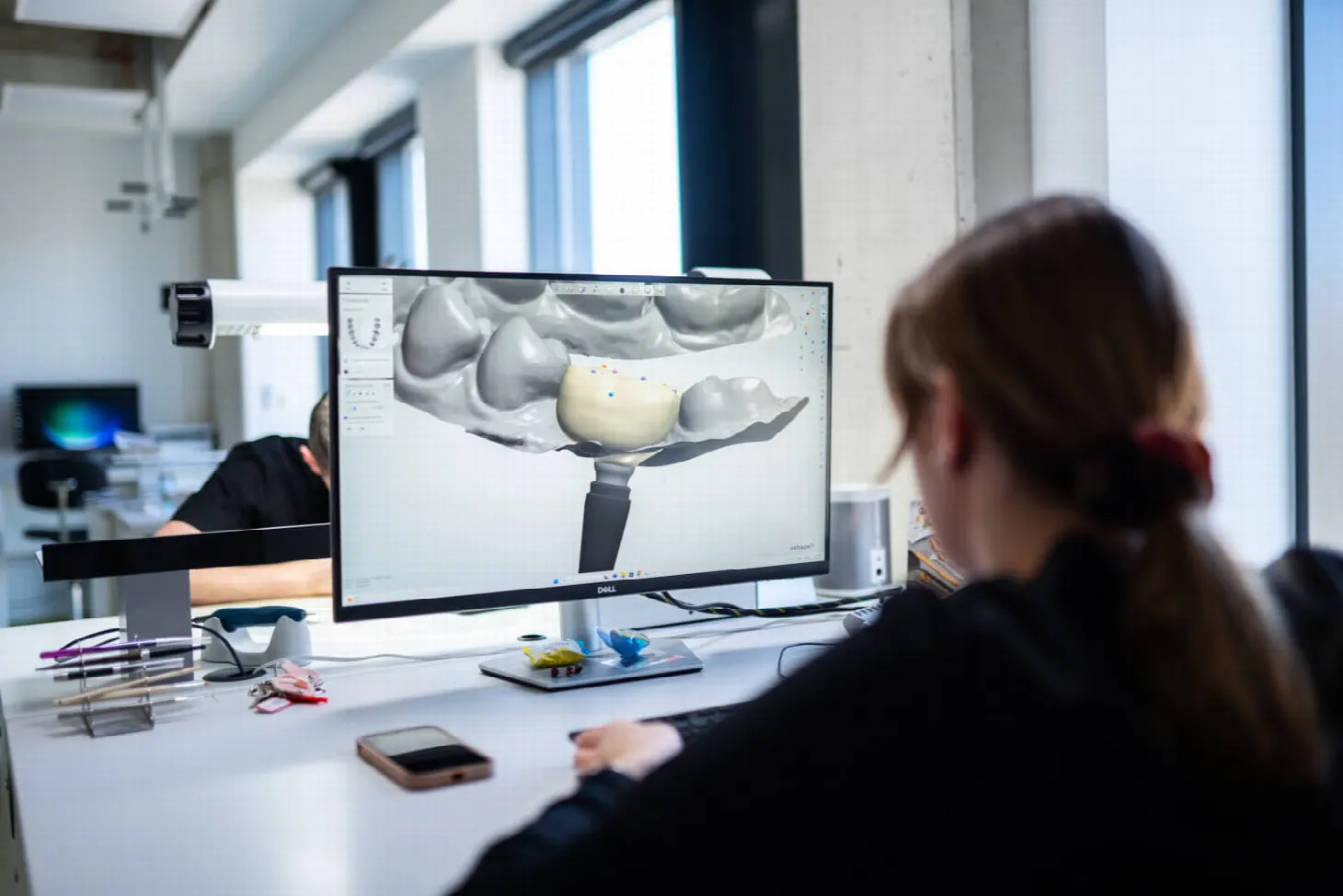
The goal of implantation is to place the titanium screw firmly in the bone. Through osseointegration a strong connection forms between the bone and the implant surface (the screw “grows together” with the bone). The implant is then in many ways as stable as a natural tooth.
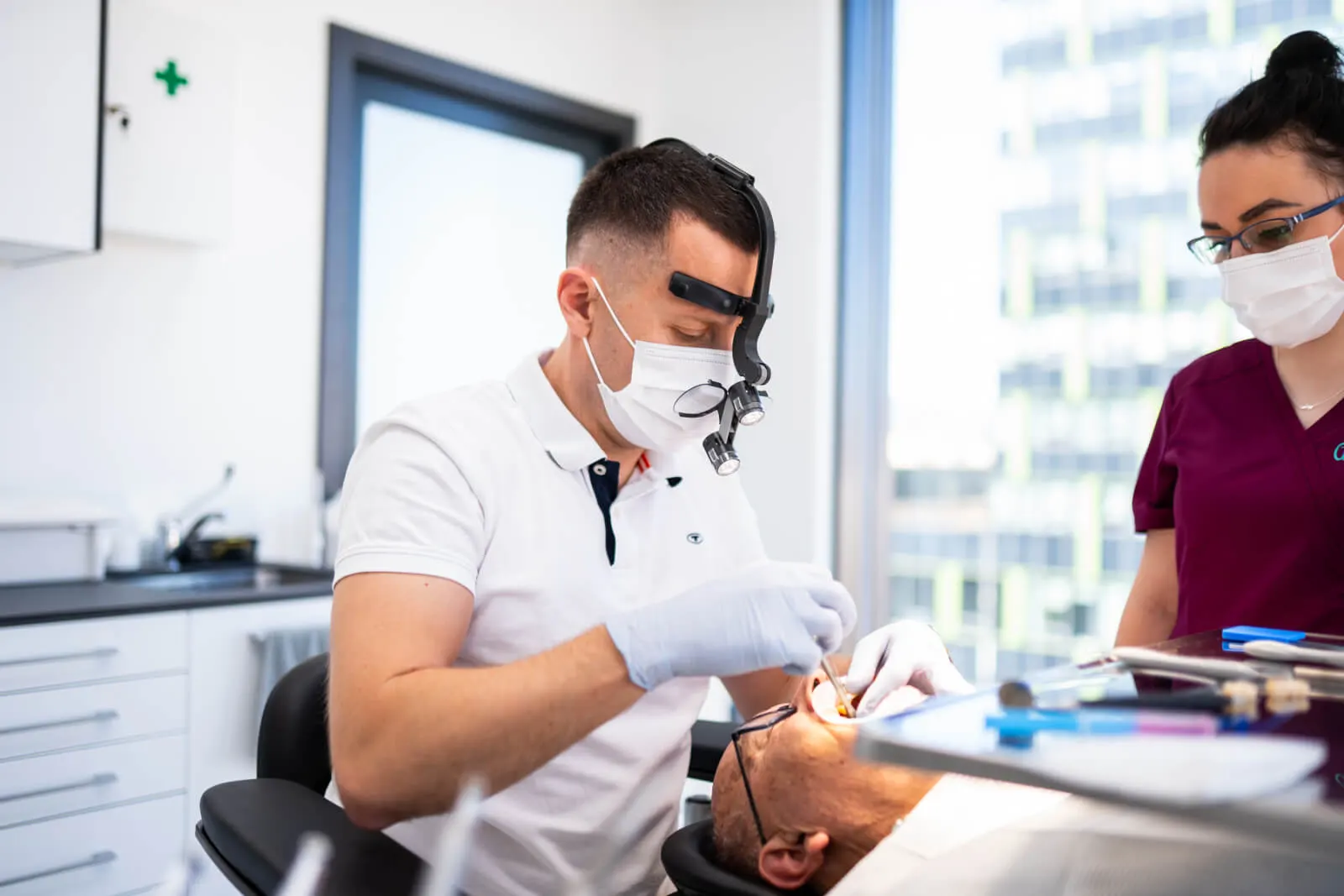
How is a dental implant placed? The exact procedure depends on the situation in your mouth – above all on the amount of bone. The procedure is done as an outpatient and under local anaesthesia. During it you mainly feel pressure and vibration. The dentist opens the gum to reach the bone, prepares a bed in the bone with special drills and screws in the artificial root – the titanium screw. If the bone is firm enough, the implant can sometimes be loaded straight away with a temporary crown; in most cases, however, the gum is stitched over the implant and the healing phase begins.
Healing after implant placement
While the surgery itself takes only a few dozen minutes, the healing phase, during which the bone gradually grows around the implant, needs more time, check-ups and patience. Recovery takes 3–6 months on average.
- For 24 hours after the procedure, apply cold compresses to your cheek to reduce swelling and pain.
- Do not eat or drink until the anaesthesia has worn off.
- For the first 7–10 days eat only liquid and soft food and avoid biting on the implant side.
- Avoid hot food and drinks.
- Do not drink through a straw. It creates suction in the mouth, which can disturb the healing wound and restart bleeding.
- Rinse your mouth with the recommended mouthwash or chamomile.
- Take painkillers as needed and the antibiotics prescribed by your dentist.
- Keep your check-up appointments at the clinic.

Placing the abutment and making the crown
Healing in the lower jaw is shorter – usually up to 3 months. Healing in the upper jaw can take longer – up to 6 months. Once the bone has grown around the titanium screw, the implantologist uncovers the top of the implant and attaches the abutment – the connecting piece that holds the crown on the implant and helps spread chewing forces. We then use the 3shape TRIOS digital intraoral scanner to create a 3D model – a precise impression for making the new crowns.
Fitting the dental crown
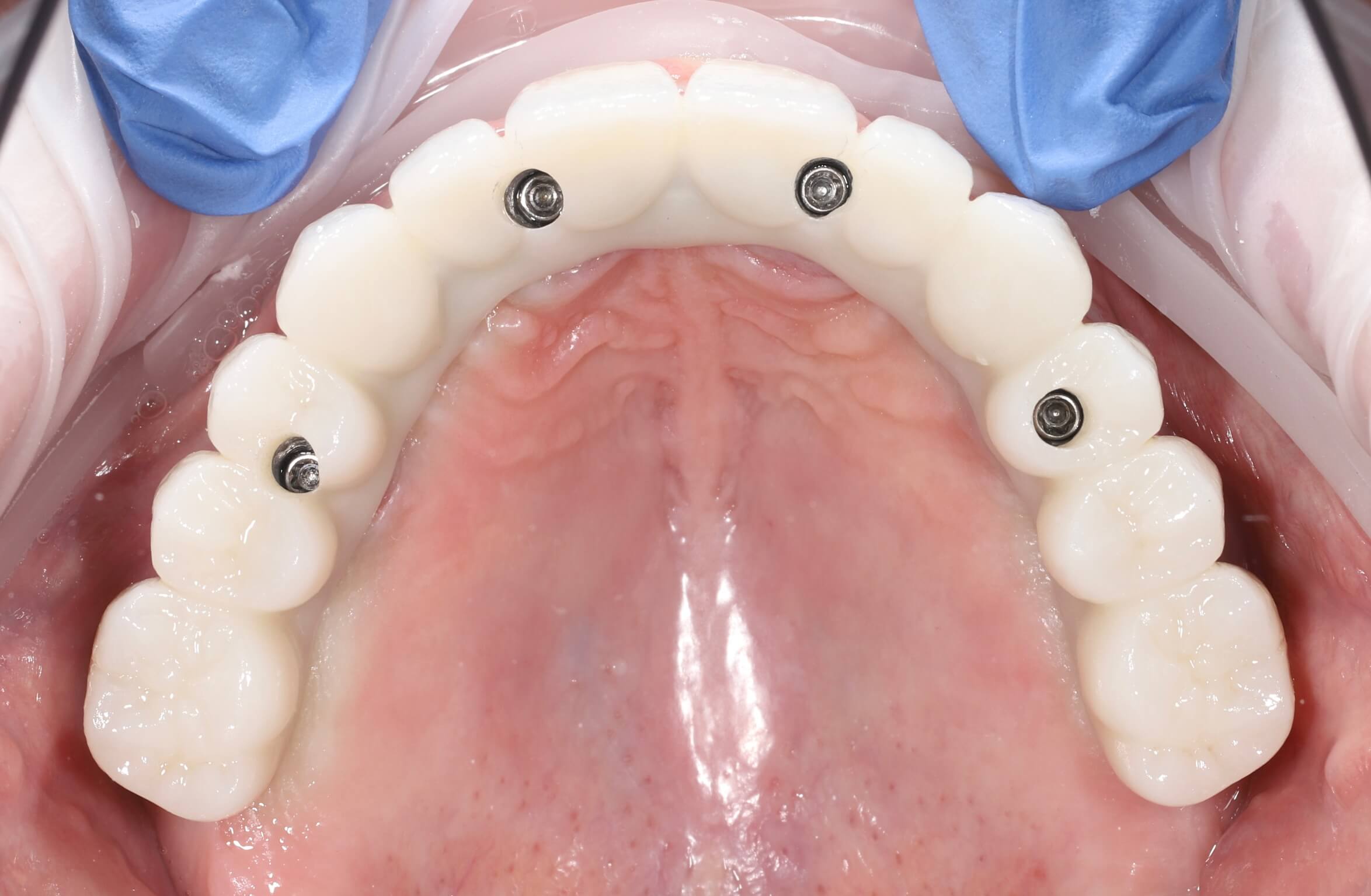
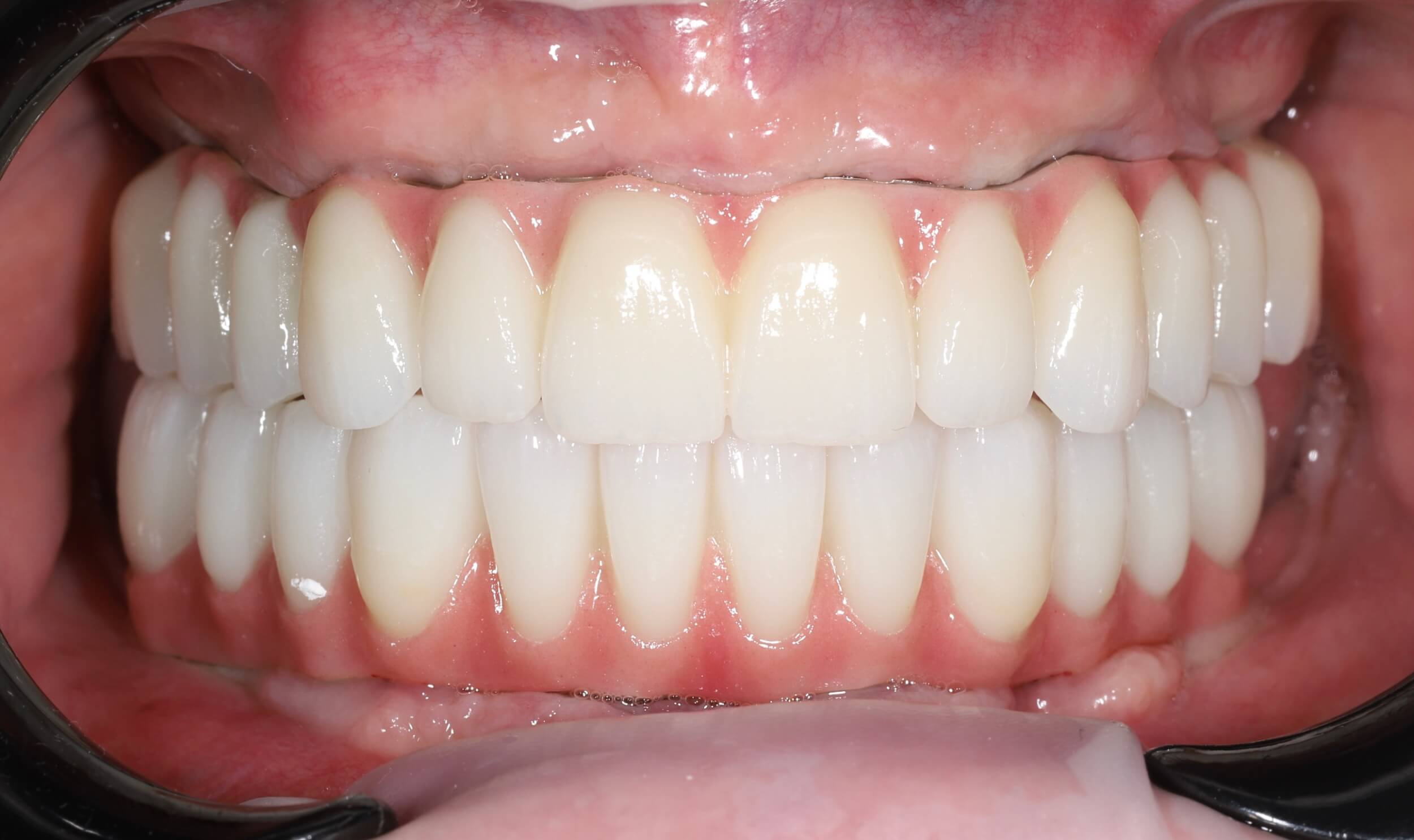
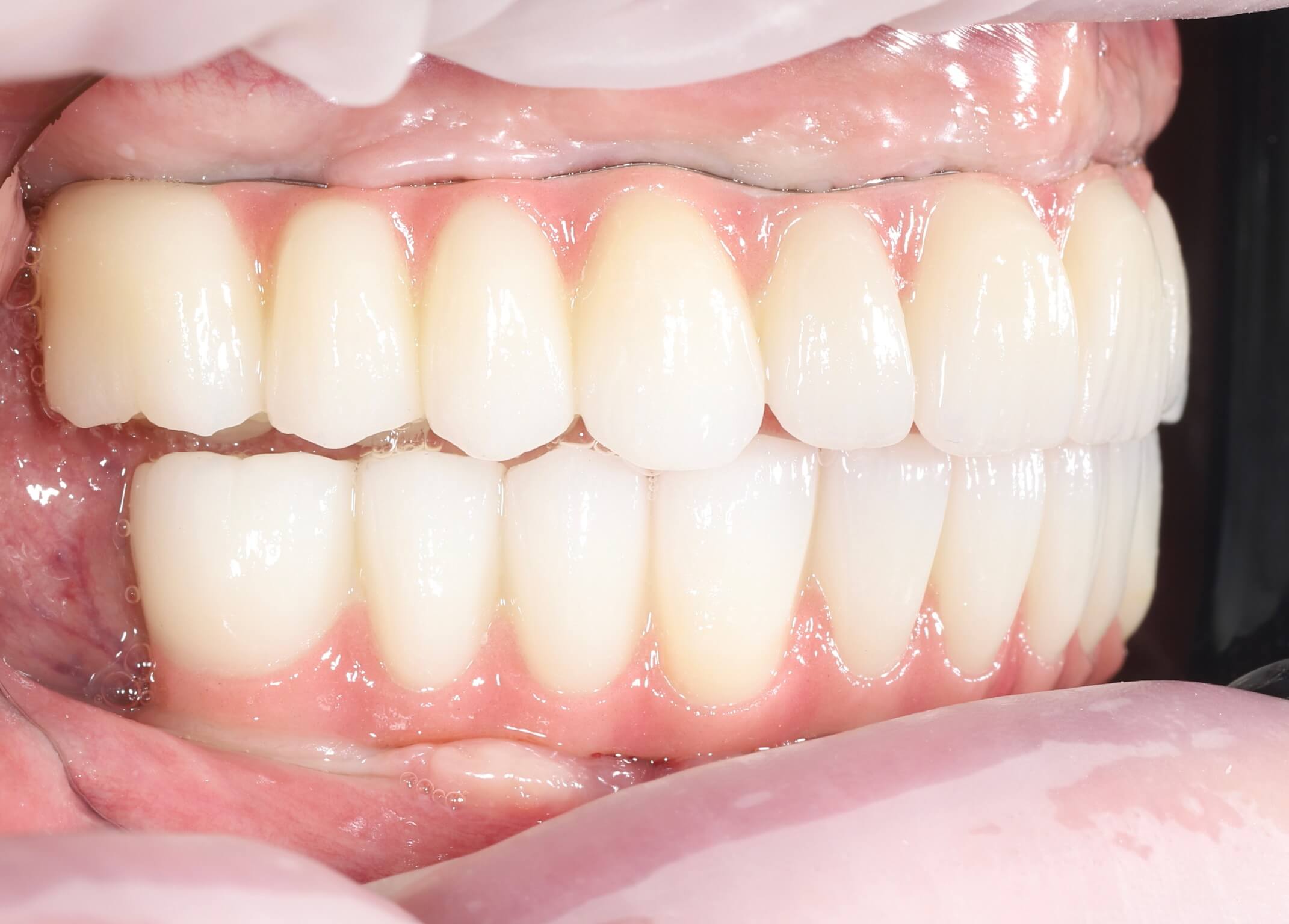
The final step is fitting the dental crown. At Happydent you can choose crowns made of proven materials such as metal-ceramic, ceramic or zirconia. We make sure the crown matches the shape and colour of your other teeth. The result is a stable, fully functional and natural-looking tooth that replaces the missing one.
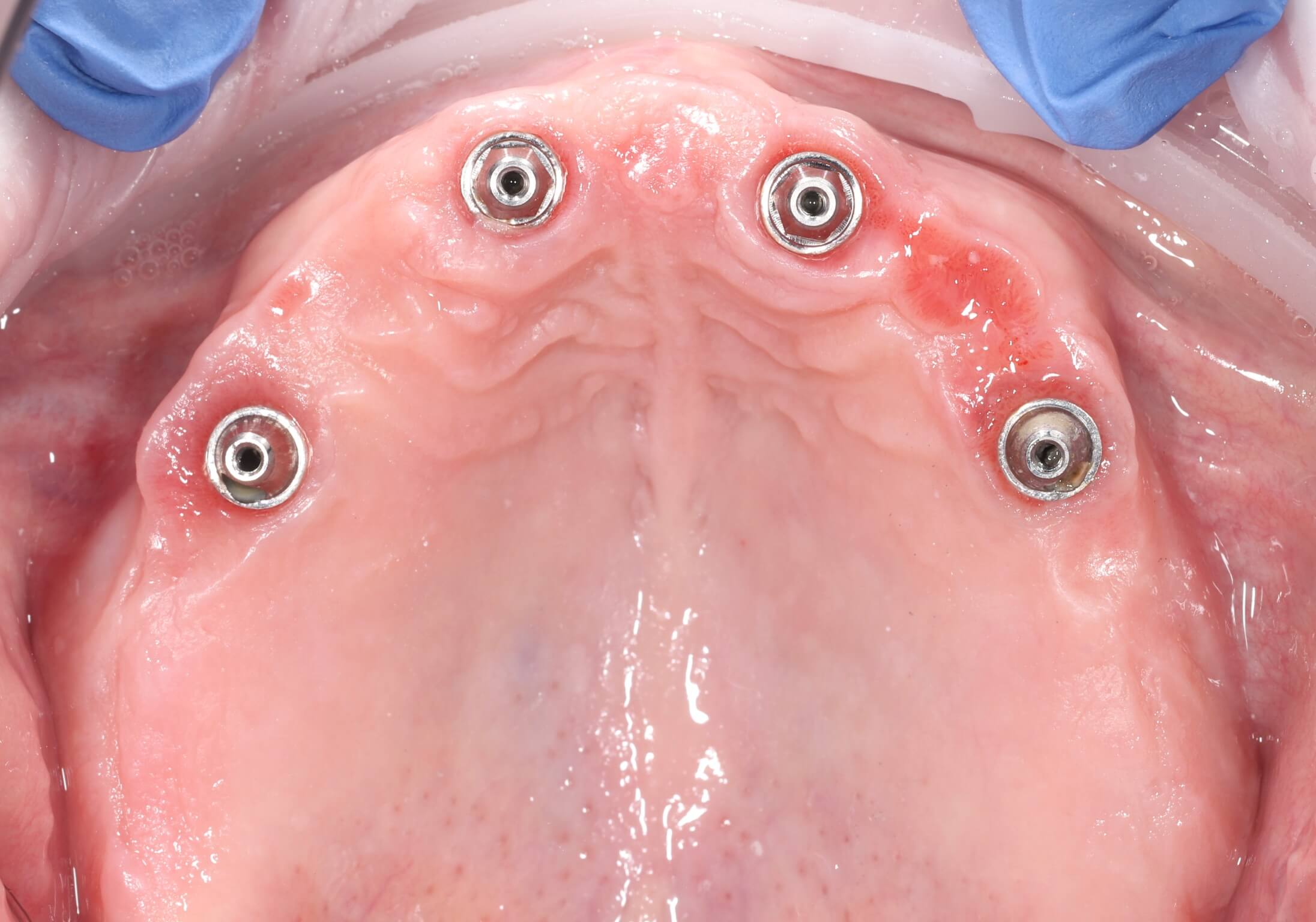
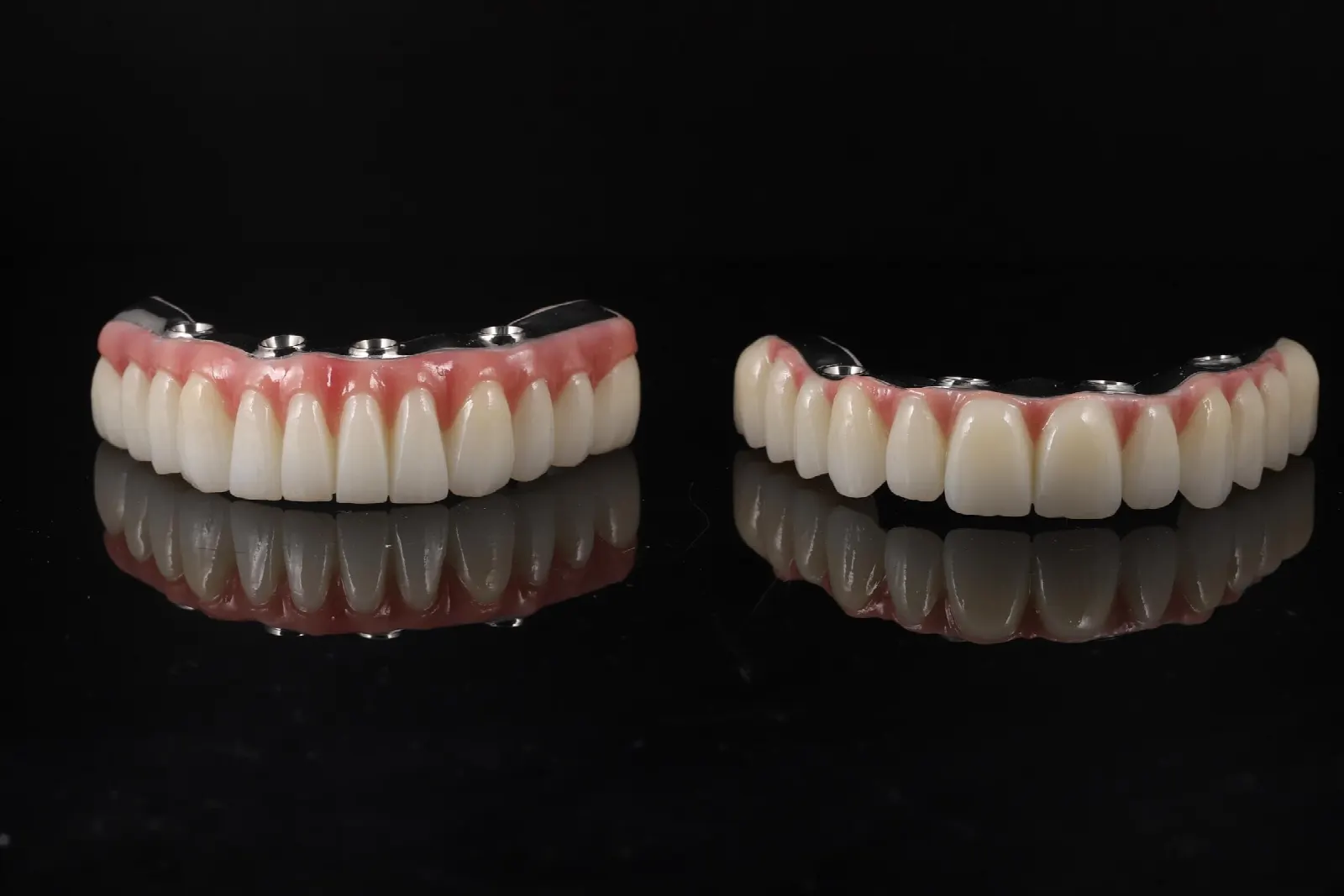

Do you have more questions? Have you been thinking about dental implants for a while? Our specialists at Happydent take care of every patient so that the time in the dental chair is rewarded with a beautiful, healthy smile. Book a dental implant consultation online or by phone.
 Facebook