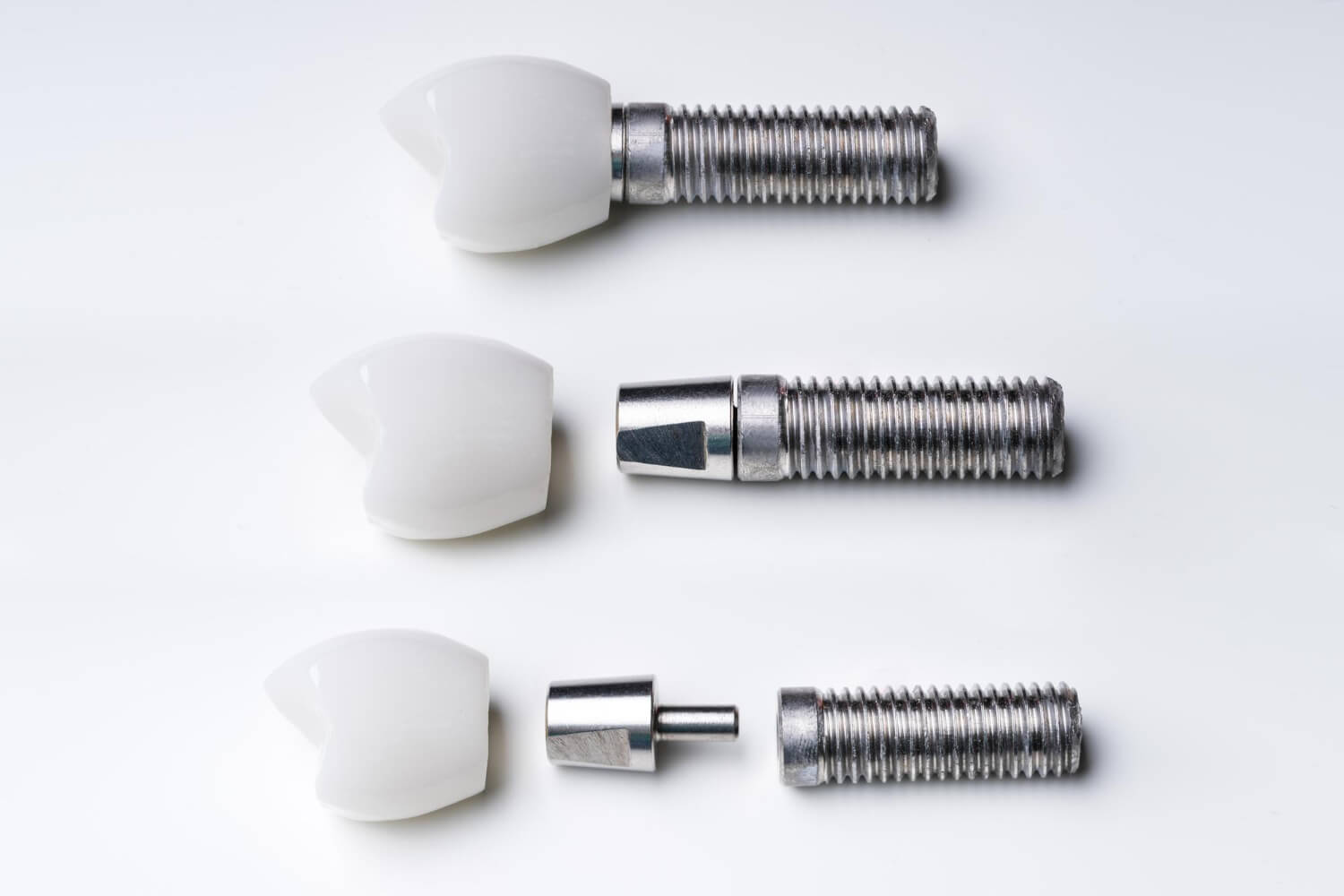
Have you heard about mini dental implants and want to know what they do? As the name suggests, mini implants are smaller than standard dental implants. They are used mainly to stabilise and anchor removable dentures. Their main advantage is that placing them takes less time and costs less than placing classic implants.
What is a mini dental implant?
A mini dental implant is a screw made of titanium alloy with a diameter of roughly up to 3 mm. It is narrower than a standard dental implant, which has a diameter of about 3.5 to 5 mm. Most often it is a one-piece design: the screw is placed in the jaw bone and a rounded head sticks out above the gum.
A mini implant also has a different purpose from a standard dental implant. A dental implant fully replaces the root of a missing tooth, while mini implants have proven best for fixing removable dentures (in other words, for holding loose dentures in place).
Shorter recovery and fewer restrictions
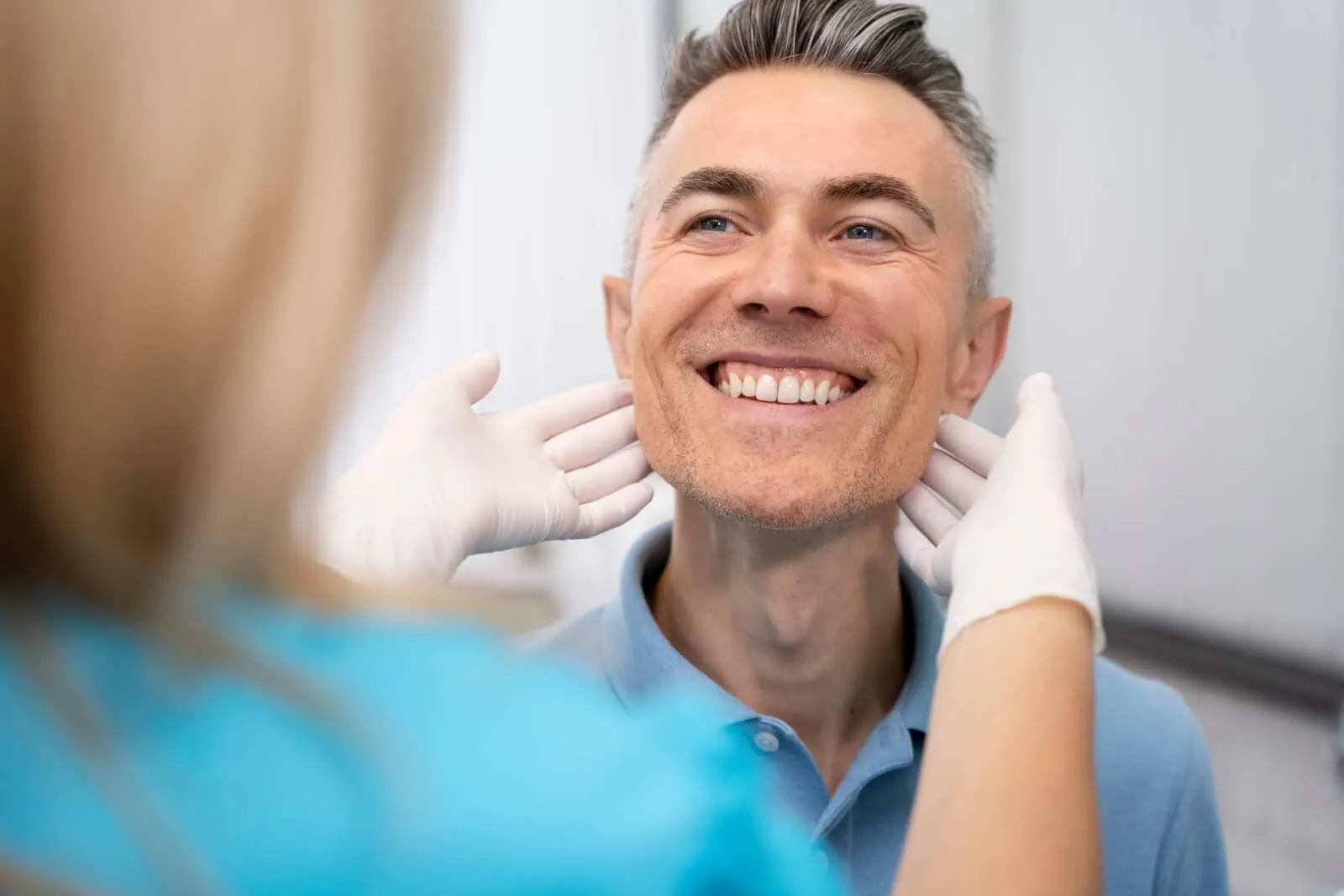
Placing a mini implant is considered less invasive, faster and simpler. It is done under local anaesthesia only, and recovery is much shorter than after larger procedures. During the procedure you mainly feel pressure and vibration.
Most patients with mini implants go back to their usual activities the next day, with some restrictions (for example, no hard food for a few days). Mild swelling or tenderness may appear after the procedure; this is quite normal for this treatment.
A solution for loose dentures
People who have lost their own teeth and wear complete dentures often struggle with a loose, unstable denture. This happens mainly when no teeth are left to anchor the denture to. Gradual changes in the mouth – most often loss of jaw bone and changes in the gums – mean that the denture no longer fits tightly, loses suction and becomes unstable.
A loose denture cannot reliably do any of its main jobs, and the wearer “loses control” of it. It makes chewing difficult, makes speech much less clear and has a direct effect on self-confidence. How can you deal with a loose complete denture?
- In the short term, denture adhesive creams and gels can help.
- Another option is a professional relining of the inner side of the denture so that it again matches the current shape of the gums. Even this may not solve the stability problem for good.
- In recent years a popular solution has been fixing the denture with mini dental implants. Two to six mini implants are placed in the jaw bone and work as anchors. Special holders (housings) that fit the ball-shaped heads of the mini implants are fixed into the underside of the existing denture. The mini implants stay in the mouth, but the denture remains removable.
When to consider mini dental implants
Mini implants do not fully replace classic dental implants when single teeth are restored. Still, they help with several common problems.
- They are used most often, and work best, to stabilise complete removable dentures. The mini implants then act as “anchors” for the denture.
- Because mini implants have a smaller diameter, they can also be used where anatomy is limited – for example, when jaw bone has been lost. Classic implants would then need extensive and costly bone augmentation (adding bone material to the upper or lower jaw). Mini implants can also be placed in narrow and hard-to-reach areas of the mouth.
- Placing a mini implant is considered gentler – often without cutting and stitches (only through a small opening in the gum). This suits people who do not want weeks or months of recovery and need to get back to normal life quickly with a stable denture and few restrictions.
- Last but not least, mini implants are more affordable than classic dental implants. In Košice, a removable denture on mini implants costs €500; prices for Košice and Chorvátsky Grob are on the mini implants page.

More questions? Ask us
The team of specialists at the Happydent dental clinic specialises in dental reconstruction and implants. We offer more than 10 types of implants. If you want to know the current state of your mouth and whether dental implants or mini implants suit your case, book an initial consultation and diagnostics with us. We will be happy to advise you, explain the course of treatment and answer your questions.
 Facebook